

Being brave enough to start the conversation that matters.
For decades, one idea has quietly shaped how I show up — in leadership, in risk, and in life: be brave enough to start a conversation that matters.
Inspired by Margaret Wheatley’s words, this has never been just a quote to me. It’s been a practice. A choice. A willingness to step beyond comfort and into courage — even when the outcome wasn’t certain.
That courage took me on a journey I never could have mapped in advance. It’s what led me to question the way leadership and risk were being approached. It helped shape my path to becoming a Risk Rebel. And it showed me that risk management, when done through and with people, isn’t a constraint — it can be a leadership superpower.
This year, I’ll be sharing a series of reflections built around that idea. Not as theory. Not as slogans. But as lived experience — for leaders who feel that quiet pull to step forward, start the harder conversations, and build something stronger in the process.
Which is why, for this first piece, I want to explore something that is rarely spoken out loud — yet shapes everything.
Because the choice we make when building teams — between comfort and courage — doesn’t just feel different.
It creates very different cultures, very different risks, and very different futures.
When comfort quietly replaces courage
Most leaders don’t wake up intending to build echo chambers. It doesn’t happen through bad intent — it happens through human instinct. We naturally gravitate toward people who feel familiar, who share our values, our standards, and our sense of how things are done around here.
And let’s be clear — that’s not the problem.
That’s essential.
As Seth Godin says:
“People like us do things like this.”
Seth Godin
That’s not conformity.
That’s identity.
And identity matters deeply.
But here’s where leaders need to be brave enough to look a little closer.
Because there’s a meaningful difference between shared values and shared thinking. Between cultural alignment and cognitive sameness. Between belonging — and blending in.
When alignment quietly turns into agreement without challenge…
When belonging starts to mean don’t rock the boat…
When safety becomes don’t see differently…
What feels like harmony can slowly slide into homogeneity.
What feels like alignment can become unchallenged consensus.
What feels like stability can quietly become strategic fragility.
And this is the moment the real conversation begins.
Not about whether shared values matter — they do.
But about whether we are brave enough to ask something deeper:
Are we building teams that protect comfort…
or cultures that are strong enough to hold courage?
Because this — right here — is where being brave enough to start the conversation that matters truly begins.
Comfort, courage, and risk
Comfort builds calm. Courage builds capability.
Both have their place. But only one truly prepares you for the future.
When leaders surround themselves only with what feels familiar, they don’t lose talent — they lose range. They lose early warning signals, ethical friction, creative disruption, and the people who could help them see risk before it becomes harm.
Because here’s the truth most organisations miss:
your risk sensors are not your systems.
They are your people.
But people only become risk sensors in one kind of environment — a safe zone. A place where it’s safe to speak, question, and see differently.
Without that safety, people don’t become risk sensors.
They become risk silencers — not because they don’t care, but because it feels safer to stay quiet.
And in a world that is more complex, more volatile, and more human than ever, that’s not just a culture issue.
That’s a leadership risk.
Why difference really matters
Leadership is, at its heart, a team sport.
Ask a hundred people how to build a great team and you’ll likely get a hundred different answers — and that’s not a problem. That’s the point. The diversity of those answers reflects the reality of leadership: there is no single way to build strength, resilience, or performance.
When I was lecturing at university, working with future leaders, this became one of our most meaningful conversations. Not because it was easy — but because it mattered.
You don’t build a winning team by recruiting the same type of player over and over again, no matter how talented they are. Depending on the position — and even the opponent — you build purposefully. You shape your team deliberately with intention.
Great teams are defined by contrast: those who spot danger early, those who connect the play, those who take bold shots, and those who hold steady under pressure. Not just different positions and roles — but different perspectives on the game.
And the same is true in leadership.
This isn’t about where people sit on the field.
It’s about how they see it — and whether leaders are brave enough to make space for that.
Because difference doesn’t feel safe by default. It only becomes powerful when leaders create a safe zone first.
Without safety, difference quickly turns into conflict. Challenge starts to feel like a threat. And honesty becomes a career risk.
But with safety, everything changes. Difference becomes strength. Challenge becomes clarity. And honesty becomes leadership.
And this is where teams stop being groups of capable individuals —
and start becoming collective intelligence that drives real results.
The human cocktail behind it all (S4R)
This isn’t just a leadership issue.
And it isn’t just a risk issue either.
It’s a people issue.
When leaders default to sameness, it’s rarely strategic. More often, it’s emotional.
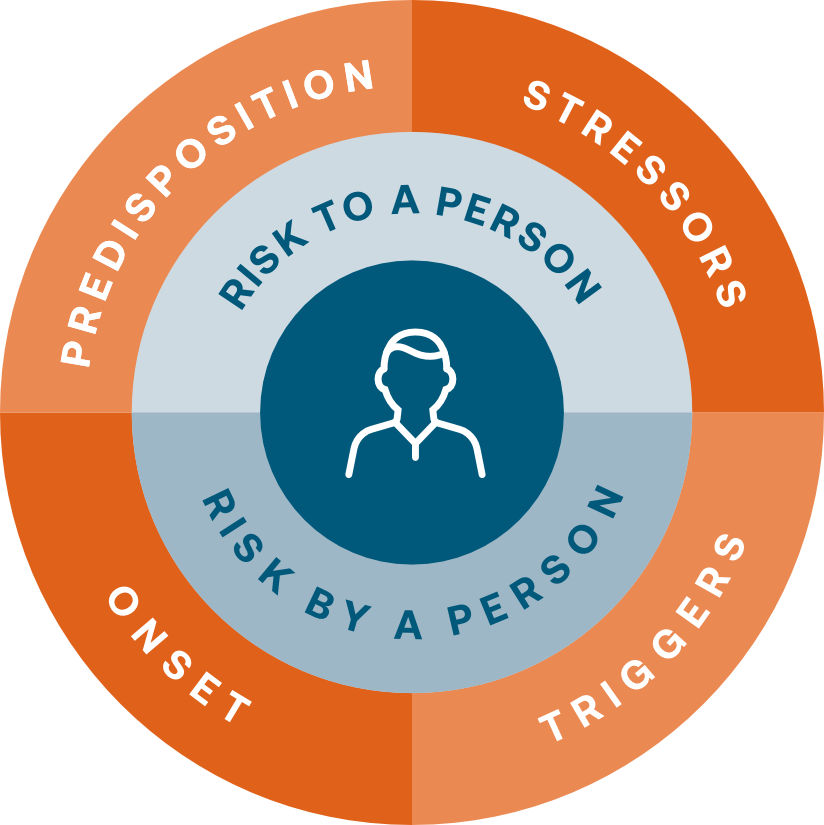
That’s exactly where S4R — Unearth’s System4Risk, part of the PROTECT Framework — becomes so powerful. It helps leaders understand the human cocktail behind risk: predisposition, stressors, triggers, and onset.
Every leader brings natural wiring — a desire for harmony, a discomfort with conflict, a need to be liked. Layer on the daily pressure of performance and responsibility, and it’s easy to default to what feels predictable and safe.
Then come the triggers — moments when difference led to tension, when speaking up cost political capital, when challenge was met with backlash. Over time, these experiences teach a quiet lesson: different feels dangerous.
And when a trigger lands hard enough, it often leads to onset — a shift in attitude, motivation, or intent. Sometimes that looks like retreat and disengagement. Other times it shows up as frustration or over-control. Either way, something changes inside — and what looks like a simple team preference becomes a risk pattern in motion.
That’s why courage in leadership isn’t about personality.
It’s about self-awareness.
The real conversation that matters
So here’s the conversation leaders need to be brave enough to start — first with themselves, and then with their teams:
Are we creating a culture where people feel safe to think differently and stretch beyond what’s familiar…
or are we unintentionally rewarding comfort over growth?
Because organisational identity isn’t built by slogans.
It’s built by the choices leaders make every day — what they encourage, what they tolerate, and what they quietly shut down.
And risk doesn’t always start with incidents.
More often, it starts with silence.
Silence when something doesn’t feel right.
Silence when a better idea goes unspoken.
Silence when comfort wins over courage.
And that’s why being a Risk Rebel isn’t about being loud.
It’s about being honest.
It’s about having the courage to ask:
Does this feel comfortable — or is it strong?
Does this feel aligned — or is it resilient?
Does this feel safe — or is it brave?
Because the leaders who truly change cultures aren’t the ones who avoid discomfort.
They’re the ones who design for it — safely.
So if this blog sparks a quiet reflection, opens a courageous conversation, or invites a brave rethink — then it’s done exactly what it was meant to do.
Because leadership doesn’t grow in comfort zones.
It grows in safe zones — where courage is invited, difference is respected, and the conversations that matter finally get the space to breathe.