
Disillusionment: The Fastest Path to Disengagement
You may have heard me talk about disengagement over the years — and why I believe it’s one of the greatest and most understated risks inside any organisation.
There are many entry points onto the disengagement pathway:
consistent disappointment, unclear expectations, broken systems, ineffective leadership, hostile environments.
But there is one that accelerates the slide faster than most.
Disillusionment.
Disillusionment is what happens when something crosses a belief or value so deeply that trust doesn’t just wobble — it breaks. And once trust breaks, even if a working relationship continues, it rarely returns to its original shape. Boundaries go up. Candour reduces. Safety disappears. People start managing or limiting exposure by managing themselves — turning inward, closing off, and self-protecting.
I’m sharing this because disillusionment isn’t abstract to me.
I’ve seen what it does to people.
And recently, I watched it happen again.
This one hit me harder than most.
Not because it’s rare — sadly, it isn’t.
But because of how power was exercised, how escalation failed, and what was revealed about leadership under pressure.
And I want to be clear from the outset:
This is not a story about naming or shaming.
It’s about patterns, power, and what leadership really looks like when it’s under strain.
Because leadership isn’t revealed in moments of ease or applause — it’s revealed in moments of discomfort, exposure, and pressure.
That’s when the real version of a leader steps forward.
Disillusionment doesn’t belong to one person
At the centre of this situation is a highly capable, well-regarded professional — locally and abroad.
Someone invited into a senior role because of her credibility, perspective, and ability to work constructively with others and break down barriers. Someone who already had a meaningful career, but chose to step into a different environment hoping to create greater impact.
Like many purpose-driven leaders, she entered respectfully and curiously.
She asked questions.
She challenged constructively.
She worked openly and collaboratively to improve outcomes.
And that, it seems, became the problem.
The CEO did not welcome her approach.
She was talked down to.
Sidelined.
Projects were undermined.
A hostile environment emerged — not just for her, but for others as well.
This wasn’t about capability.
It was about control.
And by many accounts, similar patterns of behaviour by the CEO had occurred in prior roles elsewhere — intimidation, deflection, belittling, and the manipulation of narratives upward.
This is not leadership.
It is insecurity masquerading as authority.
When escalation doesn’t escalate
Here is where the entity’s system — like so many others — truly failed.
When the issue sits with the CEO, and escalation pathways are often weak, unclear, or compromised — where does a person go?
She did what organisations say they want people to do.
She raised concerns.
She sought support and guidance.
She looked for a legitimate pathway.
There wasn’t one.
There was no clear or effective reporting or escalation system to address intimidation, bullying, or psychological harm.
Knowing the Chair and seeking insight rather than accusation, she approached him — someone she had worked with over time, someone who had spoken positively about her and even championed her for the role, and someone who positioned himself as fair and principled.
She tried to share the situation and seek guidance more than once.
Each time, the issue was deflected and dismissed.
As the behaviour by the CEO escalated, her final attempt with the Chair was met not with protection, guidance, or accountability — but with a dismissive, gendered deflection designed to silence and diminish.
It was unprofessional.
It was inappropriate.
And it represented a complete break of trust.
There was no safe process.
No independent escalation mechanism.
No clear pathway for the board to be made aware of concerns.
The message became unmistakable:
There is nowhere to turn.
And in that moment — when the Chair completely shut her down and turned away — she was stunned.
Disillusionment took hold.
When the leader you trusted disappears
What made this moment so destabilising wasn’t just the failure of process.
It was the failure of relationship.
This wasn’t a distant or transactional interaction.
There was history.
Shared work.
Mutual respect built over time.
A belief — grounded in years of experience — that values were aligned.
Which is why the response cut so deeply.
In that moment, the leader standing in front of her was unrecognisable.
And this is where the question truly lives:
Will the Real Leader Please Step Forward?
Because disillusionment isn’t only about what happens.
It’s about how a leader shows up when it matters.
It’s the moment you realise that someone you believed would be open and fair — offering guidance and wisdom — instead weaponised the relationship.
No wisdom.
No guidance.
No support.
Only the confronting realisation:
I don’t recognise you — or the leadership you claim to represent.
That realisation carries weight.
It erodes confidence.
It fractures trust.
And it creates a kind of loss that’s hard to articulate, but impossible to ignore.
Not just the loss of safety in a role — but the loss of a leader you believed in.
An escalation gap we keep ignoring
What is confronting is that this pattern isn’t new.
Unfortunately, I hear variations of this situation far too often.
Several years ago, I created a two-part podcast under the Anonymous Series — not to expose organisations or individuals, but to surface real leadership experiences causing harm behind closed doors.
Different organisations.
Different sectors.
Different leaders.
And yet, the same themes kept emerging:
- Senior leaders hearing what they wanted to hear
- Constructive challenge reframed as disruption
- People moved into or out of roles without being set up for success
- Human risks raised, only to be ignored or filtered
- Escalation pathways failing, leaving whistleblowing as the only option
- Leadership through fear replacing leadership through shared vision
- The absence of a genuine safe zone where concerns could be raised without punishment
Different stories.
Same pattern.
Which tells us something important.
When words and actions collide
Disillusionment isn’t just born from failure — which often seems more like disappointment.
Disillusionment is born from something deeper: misalignment.
From the gap between:
- what leaders say they stand for
- and how they behave when tested
And this is the uncomfortable truth:
It is in moments of stress, strain, and perceived exposure that we see who a leader really is.
Not who they aspire to be.
Not who they believe themselves to be.
But who they are willing to be when power feels threatened.
That is the real mirror.
The risk most organisations don’t design for
This is not just a workplace issue.
It is a governance issue.
Most escalation systems are designed for operational risk. Many still don’t cover leadership risk — particularly at senior executive and CEO levels. They assume good intent at the top, rely on filtered information flows, and depend on trust rather than verification.
When the risk is the CEO, and senior relationships become too aligned rather than maintaining independent rigour, boards often don’t see reality — they see a curated version of it.
The cost is predictable:
Talented people lose confidence.
Good leaders leave quietly.
Systems remain unchanged.
And silence is mistaken for resolution.
All while material risks remain hidden from view.
A Risk Rebel lens — and why tools like S4R matter
This is one of the reasons we built frameworks like Unearth’s S4R (System4Risk).
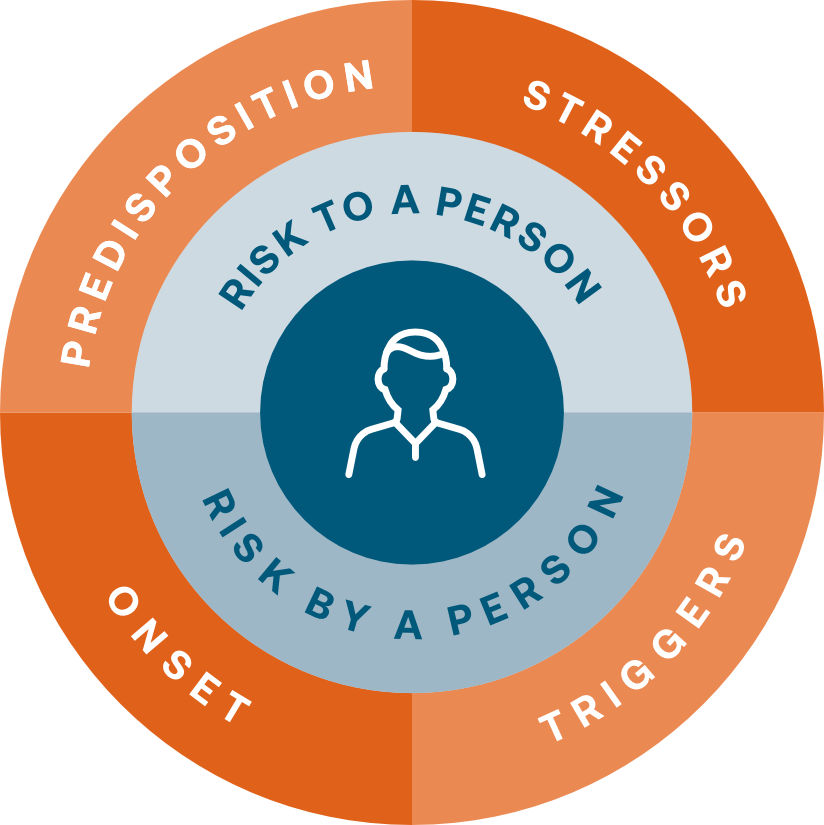
Not to “profile” people as a weapon — but to understand human dynamics earlier, support more informed vetting and placement decisions, notice behavioural shifts, and create healthier pathways for leaders and teams to respond before harm compounds.
Because risk and opportunity are two sides of the same coin — and the earlier we see what’s emerging, the more choices and runway we have.
Protecting the house means protecting truth
The person at the centre of this situation is now considering leaving — not because she lacks capability or passion, but because the environment made it unsafe to stay.
The fundamental issues remain unaddressed.
And this is where organisations get it wrong.
When people exit quietly, leaders often mistake relief for resolution.
But unresolved human risk doesn’t disappear.
It compounds.
Protecting the house isn’t about loyalty to individuals.
It’s about loyalty to the organisation’s identity — its values, purpose, and principles.
It’s about executive leadership and board members understanding their role as custodians.
It means designing escalation pathways that work even when the issue sits at the top.
It means testing governance under pressure — not trusting it in theory or ticking a box.
And it means recognising that leadership identity isn’t proven by what we say when it’s easy…
…but by what we do when it’s hard.
This isn’t about one person.
Or one organisation.
It’s about a pattern that will keep repeating — until we’re brave enough to interrupt it.
Because risk doesn’t start with systems.
Risk starts — and ends — with people.