
BLOG Series: The Risk Sitting Around the Board Table – Part 4
The Conversation We Rarely Have
Throughout this series, I have explored the increasing complexity of governance, the evolving expectations placed upon boards, and the influence governance can have on the organisations it is entrusted to steward.
We have explored how boards develop profiles over time, how governance influences far more than compliance and oversight, and how boards shape priorities, decision-making, accountability, and the conditions through which organisational identity is either strengthened or weakened.
And sitting quietly beneath all of those conversations has been one central idea.
Organisational identity matters.
Not simply because it helps organisations describe who they are, but because it provides direction. It provides a reference point when difficult decisions need to be made and helps organisations navigate complexity, uncertainty, competing priorities, risks, and opportunities without losing sight of what they ultimately exist to achieve.
Purpose.
Values.
Mission.
Vision.
Beliefs.
Culture.
Together, they form something far greater than a collection of statements.
They become the organisation’s North Star.
The reference point against which decisions, priorities, behaviours, and stewardship should ultimately be tested.
And if organisational identity sits at the heart of effective stewardship, perhaps there is a question that naturally follows everything we have explored throughout this series.
The Question We Rarely Ask
How do we know the board remains aligned with the organisational identity it has been entrusted to protect?
Not simply when directors first join the board.
Not simply through annual reviews.
But throughout the stewardship journey itself.
Because while organisations routinely assess strategic risks, financial risks, operational risks, cyber risks, compliance risks, and people risks, very few invest the same level of effort understanding whether the collective stewardship profile sitting around the board table remains aligned with the identity guiding the organisation forward.
That observation is not intended as criticism.
Most boards are made up of people who genuinely care. People who want the organisation to succeed and who bring decades of experience, expertise, wisdom, relationships, and commitment to the role.
The challenge is rarely a lack of care.
The challenge is that stewardship now takes place within increasingly complex environments.
Boards today face expectations that would have been difficult to imagine even a couple of decades ago. Cybersecurity, artificial intelligence, organisational culture, psychological safety, executive accountability, environmental and social responsibilities, regulatory scrutiny, stakeholder expectations, and reputation management all compete for attention alongside the traditional responsibilities boards have always carried.
It is little wonder that most boards spend significant time looking outward at the organisation, its environment, and the risks it faces.
Perhaps the opportunity is to occasionally pause and look inward as well.
Because if organisational identity truly serves as the North Star, then understanding the people entrusted with protecting it—and how they collectively steward it over time—deserves far more attention than it currently receives.
Looking Beyond Traditional Board Reviews
Most organisations invest considerable effort selecting board members.
Skills matrices are reviewed.
Experience is assessed.
References are checked.
Interviews are conducted.
Expertise is carefully considered.
And rightly so.
The responsibility attached to board stewardship demands diligence.
Many organisations also conduct periodic board reviews, governance assessments, and effectiveness evaluations to ensure the board continues operating as intended.
Again, these are important activities.
But perhaps there is a limitation within many of these approaches.
They often help us understand what individual directors bring to the board through their governance capability, technical expertise, industry knowledge, attendance, contribution, and experience.
What they often struggle to reveal is the extent to which directors individually and collectively embody the organisational identity they have been entrusted to steward.
Because stewardship is not simply about understanding governance obligations.
It is about protecting purpose, values, mission, vision, culture, and direction over time.
And it is about understanding what emerges when a group of individuals begins stewarding together.
The Human Dynamics of Stewardship
Boards are not simply collections of skills, qualifications, and governance expertise.
Boards are collections of people.
People bring perspectives shaped by decades of experience. They bring personal beliefs, motivations, assumptions, strengths, vulnerabilities, leadership styles, communication preferences, and different ways of interpreting information, risk, and opportunity.
They also bring pressures, competing priorities, external commitments, professional responsibilities, and life experiences that continue to influence them long after they take their seat at the board table.
Over time, those individual characteristics begin interacting with one another.
A collective stewardship profile emerges.
Not because anyone intends it to happen.
But because every group of people develops patterns, dynamics, strengths, opportunities, and exposures over time.
One of the realities that becomes visible when we begin examining the human dimensions of stewardship is that people rarely interpret information in exactly the same way.
Each director arrives at the board table with a unique life journey, different experiences, personal values, professional backgrounds, motivations, beliefs, and ways of making sense of the world around them.
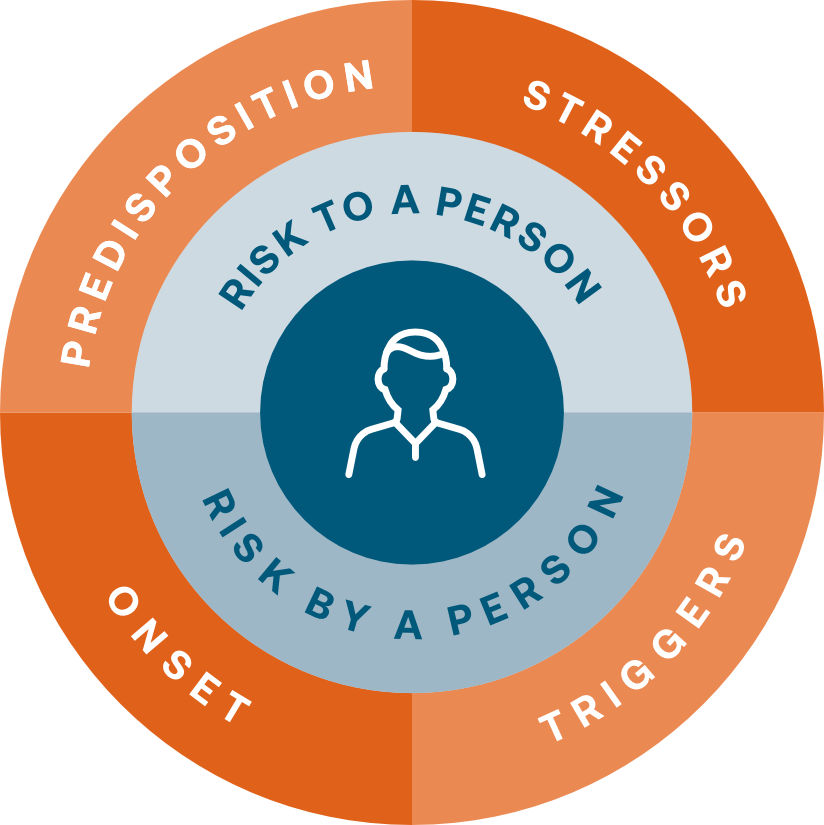
These influences sit within what I describe in Unearth’s S4R (System4Risk) as Predispositions. They help shape how people interpret information, assess opportunities, perceive threats, evaluate priorities, and ultimately determine what they believe represents the best path forward.
This is one of the reasons governance discussions can be both valuable and challenging.
Because it is entirely possible for a group of directors to share the same intention, support the same organisational purpose, and genuinely want the best outcome for the organisation, while arriving at very different conclusions about how to achieve it.
Not because someone is right and someone is wrong.
Not because someone cares more than another.
But because people interpret information through different lenses and have strong beliefs in how to get there. They can even be using the same words, yet the meaning each person attaches to those words may be slightly different—or significantly different.
In many respects, this diversity of perspective is one of the strengths of effective governance.
Different experiences can reveal different opportunities.
Different perspectives can identify different risks.
Different viewpoints can challenge assumptions that might otherwise go unquestioned.
The challenge is ensuring those differences remain anchored to the organisational identity the board exists to protect.
Because alignment and agreement are not the same thing.
Directors do not need to think identically. They do not need to approach every issue from the same perspective. But they do need to remain connected to the same North Star.
This is also why environments that encourage healthy challenge, respectful debate, curiosity, open dialogue, and psychological safety are critical to effective stewardship.
And if organisational identity truly serves as the organisation’s North Star, understanding those dynamics becomes increasingly important.
Which raises an interesting question.
If stewardship is ultimately exercised through people, how do we better understand the human factors influencing stewardship itself?
Why S4R Creates a Different Conversation
This is where I believe S4R (System4Risk) offers a powerful and different perspective.
S4R was developed to help better understand the human dimensions of risk.
Not simply the event.
Not simply the behaviour.
Not simply the outcome.
But the factors influencing people long before those outcomes become visible.
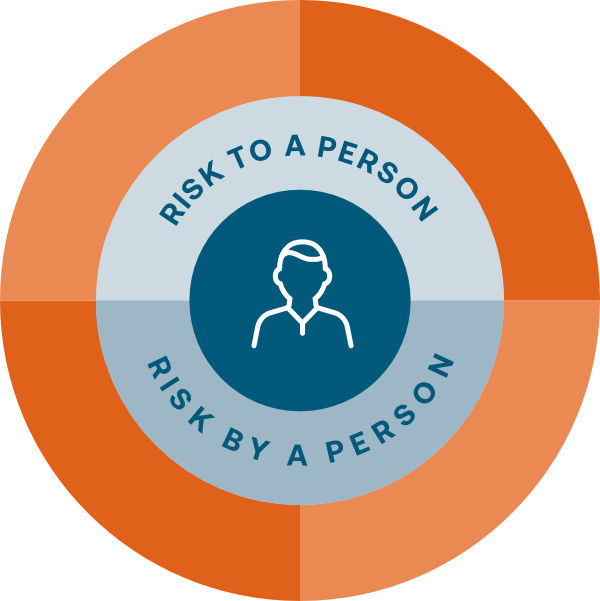
At the centre of the model sits a person.
This is intentional.
Because risk starts and ends with people.
The next layer explores two interconnected dimensions: Risk To A Person and Risk By A Person.
Risk to a person explores the threats, pressures, exposures, harms, and influences acting upon an individual.
Risk by a person explores how an individual may intentionally or unintentionally create harm, influence outcomes, or contribute to risk exposure.
Both perspectives matter.
Because understanding what is influencing a person often provides valuable insight into the behaviours, decisions, and outcomes that may emerge through them.
Directors do not stop being people when they join a board.
They remain exposed to pressures, competing priorities, professional obligations, reputational considerations, stakeholder expectations, organisational challenges, and the realities of life outside the boardroom.
Understanding those influences does not remove accountability.
It strengthens visibility.
And visibility often creates better opportunities for stewardship.
The outer layer of S4R explores Predispositions, Stressors, Triggers, and Onset, creating visibility into the factors influencing behaviour, decision-making, motivations, actions, and outcomes long before they become obvious.
Importantly, S4R was never designed as a judgement tool.
It was designed as an understanding tool.
Because awareness creates options.
And better options often lead to better decisions.
The Blind Spot Sitting Around the Board Table
One of the challenges with alignment is that it is often assumed rather than examined.
After all, most board members join organisations because they believe in the purpose.
They support the mission.
They want the organisation to succeed.
So, it can be tempting to assume alignment naturally continues.
But stewardship is rarely that simple.
People evolve. Boards evolve. Leadership teams change. Priorities shift. New pressures emerge and circumstances change.
What may have felt perfectly aligned at one point in time can gradually be influenced by a range of factors that are often difficult to recognise while they are occurring.
And while few boards would intentionally move away from organisational identity, many may never stop to ask whether subtle drift is occurring.
Not because someone is doing the wrong thing.
Not because people have stopped caring.
But because no one is actively looking.
That is what makes alignment so interesting.
And potentially so important.
The greatest risk may not be misalignment itself.
The greatest risk may be assuming alignment exists without ever taking the time to understand whether it still does.
This is where the idea of a Board Risk Profile becomes particularly powerful.
Not as a governance assessment.
Not as a performance review.
Not as a report card.
But as a living stewardship tool.
A tool that helps create visibility around the collective stewardship environment operating around the board table.
A tool that helps boards better understand strengths, opportunities, emerging risks, and potential blind spots.
A tool that supports ongoing reflection about whether the board remains aligned with the organisational identity it has been entrusted to protect.
Because organisational drift rarely occurs overnight.
More often it emerges gradually through changing circumstances, competing priorities, external pressures, shifting assumptions, and different interpretations of what success looks like.
The challenge is that drift is often easiest to recognise in hindsight.
The opportunity is creating enough visibility to recognise it much earlier.
Understanding Strengthens Accountability
One of the opportunities that emerges from conversations like this is the ability to strengthen accountability through greater understanding.
Because once we better understand the factors influencing stewardship, challenge, decision-making, behaviour, alignment, and board dynamics, we place ourselves in a stronger position to make informed decisions.
We can better support one another.
We can better challenge assumptions.
We can better leverage the strengths sitting around the board table.
And we can better identify opportunities, blind spots, and emerging risks that may otherwise remain hidden.
This is particularly important when organisational identity serves as the organisation’s North Star.
Because effective stewardship requires more than good intentions.
It requires ongoing awareness of the factors that may be strengthening alignment with that North Star—or gradually pulling the organisation away from it.
Accountability remains essential because stewardship demands it.
But accountability informed by understanding is often far more effective than accountability built upon assumptions.
Assumptions create blind spots.
Understanding creates clarity.
Clarity creates transparency.
And transparency creates opportunities to make better decisions in service of the organisation and the identity it has been entrusted to protect.
The Courageous Conversation
Throughout this series, I have repeatedly returned to one central idea.
Organisational identity matters.
Because when organisational identity drifts, the consequences rarely remain isolated to governance.
They eventually influence strategy, leadership, culture, decision-making, performance, trust, reputation, and ultimately the people the organisation exists to serve.
Which means protecting organisational identity may be one of the most important stewardship responsibilities any board holds.
Perhaps the question is not whether board members understand the organisational identity.
Perhaps the question is whether they remain aligned with it.
Because understanding something and remaining aligned with it are not necessarily the same thing.
And perhaps the deeper question is:
How would they know?
Because what we choose to measure influences what we understand.
What we understand influences the decisions we make.
And the decisions we make ultimately influence whether we protect the very thing we were entrusted to steward in the first place.
That requires awareness.
It requires reflection.
It requires accountability.
And perhaps most importantly, it requires the courage to have conversations that many boards have never been invited to have before.
Not because something is wrong.
But because something important is worth protecting.
Perhaps the question is not whether boards should reflect on their stewardship.
The question is whether they have a practical way to do it.
Because awareness without action rarely creates meaningful change.
In the same way organisations use dashboards, reports, and assessments to better understand performance, risk, and strategy, perhaps boards need practical ways to better understand the stewardship environment sitting around the board table as well.
That conversation begins with awareness.
It continues through reflection.
And it is strengthened through a willingness to continually ask whether the board remains aligned with the organisational identity it has been entrusted to protect.
Because stewardship is not a destination.
It is an ongoing responsibility.
One that deserves the same level of attention, discipline, and reflection we apply to every other aspect of organisational success.
And if organisational identity truly is the North Star of the organisation, perhaps one of the most important responsibilities of stewardship is ensuring the people entrusted with protecting it never lose sight of it.