
Be Brave Enough to Start a Conversation That Matters
It started with a headline.
Nothing dramatic.
Nothing urgent.
Just a piece about BRICS nations being noted as top buyers of gold.
Have you ever had that moment — you see a headline and almost scroll straight past it?
That was me.
But something made me pause.
Not because I had a view.
Not because I had an answer.
But because it connected with a quiet feeling I’d had for some time — like another dot being added to a picture that was already forming.
It may sound strange, or even irrelevant to some. And if I’m honest, my interest in this topic is multifaceted. Gold had been resurfacing in conversations I was having — not just about investment, but across different contexts: history, systems under pressure, moments where trust and stability were tested.
So instead of dismissing the headline as interesting but irrelevant, I did something different.
I opened the conversation.
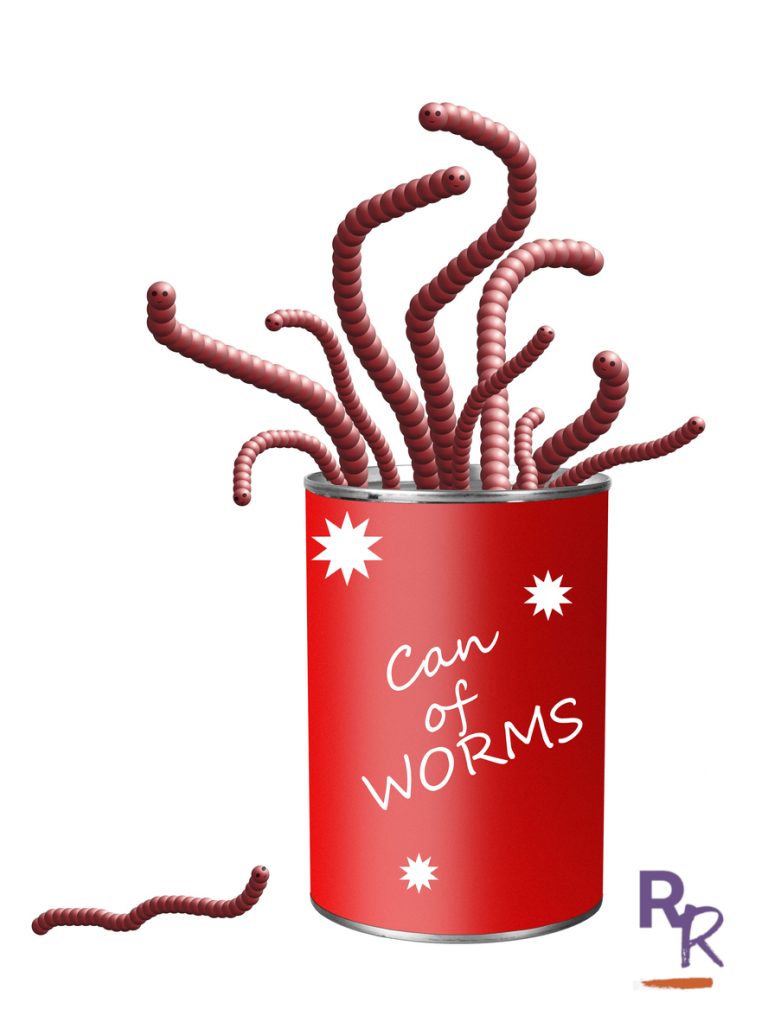
I opened the can of worms.
And I paid attention to where it took me.
Because this topic had been sitting with me for a while — and the real trigger wasn’t gold itself. It was seeing that BRICS had become one of the largest purchasers of it.
That mattered.
A can of worms worth opening
I’ll be honest — I knew this would open a can of worms. And I’ve learned over the years to pay attention when something keeps nudging at me.
Because once you start asking why questions, you don’t always get neat answers.
Why gold?
Why now?
Why are certain nations paying heightened attention to it at this time?
What does history tell us?
What does this say about systems, trust, power, or fragility?
And perhaps the bigger question:
What does this mean for us — not just governments or markets, but people, organisations, and communities?
This is often the point where conversations get shelved or shut down.
“Too geopolitical.”
“Too extreme.”
“Too uncomfortable.”
“Too unlikely.”
Or not seen as not relevant enough to warrant deeper exploration.
But here’s something I’ve learned about risk:
The conversations we avoid are often the ones that teach us the most.
This wasn’t about gold
Very quickly, it became clear this conversation wasn’t really about gold at all.
Gold was just the thread.
Pulling on it led to deeper questions about:
- how societies behave under pressure
- what happens when trust in systems weakens
- how infrastructure, money, and technology intersect
- how history repeats — just in different forms
- how quickly priorities shift when certainty disappears
Suddenly, the question wasn’t:
“Is gold a good investment?”
It became:
“How do we notice early signals — before they become crises?”
That’s a very different conversation.
Risk management isn’t meant to be comfortable
Conversations about risks and threats are, by their very nature, uncomfortable — especially when they challenge assumptions we’d rather leave untested.
And if we’re honest, if something isn’t on a checklist or neatly captured in a framework, it often doesn’t make it to the table — at least not until the signals become impossible to ignore.
This is where many organisations get stuck.
Risk management has become synonymous with compliance:
- registers
- ratings
- controls
- assurance statements
All important — but insufficient.
Because compliance rarely asks:
- What assumptions are we making about stability?
- What are we not seeing because it feels uncomfortable?
- Where are we overly dependent on systems we don’t control?
- How would we actually behave under pressure?
Real risk management isn’t about certainty.
It’s about sense-making — making sense of context, signals, and change.
And sense-making requires curiosity — not closure.
Why opening the can matters
Opening this particular can of worms didn’t give me definitive answers.
What it did give me was:
- earlier awareness
- more runway to think
- better questions
- clearer insight into vulnerabilities
- space to consider options and opportunities
That’s the part people often miss.
You don’t explore uncomfortable signals just to predict disaster.
You explore them to ensure you have runway, choice, and clarity.
Even if nothing eventuates, the thinking — and the conversations themselves — strengthen you.
That’s not wasted effort.
That’s leadership.
The danger of waiting for “stronger signals”
Many leaders wait for confirmation.
For consensus.
For the risk to become obvious enough that discussing it feels safe.
By then, the conversation is no longer strategic — it’s reactive.
We saw this with COVID.
Suddenly, the word “unprecedented” was everywhere. Yet pandemics had sat on risk registers for decades. History had already shown us what was possible — but it hadn’t been imagined as something that could happen in our time.
That wasn’t a failure of information.
It was a failure of imagination.
And it came at a terrible human cost — one that many organisations are still reckoning with.
Early signals are rarely loud.
They’re subtle.
They sit at the edge of awareness.
They often feel inconvenient.
But they’re also where:
- better decisions start
- resilience is built
- innovation emerges
- blind spots are revealed
Ignoring them doesn’t make us safer.
It just delays the reckoning.
Do you see what I see? – a Risk Rebel lens
Being a Risk Rebel doesn’t mean seeing danger everywhere.
It means being willing to:
- notice what others scroll past
- ask questions without needing immediate answers
- sit with uncertainty without panic
- notice early indicators — soft or strong — and connect them across history, people, and systems
- resist the urge to close conversations too quickly
It’s not about fear.
It’s about honesty.
And honesty — especially about risk — is what allows organisations to grow up, not just scale up.
We all see indicators differently. Each of us brings a limited perspective, shaped by experience.
Most people wouldn’t have opened that article. Many would have scrolled straight past it. And that’s why so many early risks — and opportunities — are missed.
This is also why diversity of thinking matters. When people are provided with a safe environment to speak up, question, and challenge, blind spots reduce and insight expands.
That’s why I talk about safe zones.
Why I talk about people becoming risk sensors.
Why I talk about moving from reactive to proactive risk management.
This discussion isn’t about gold.
It’s about how you notice signals.
How you connect dots.
And what you do with what you discover.
Are you willing to open the can — or do you shelve it?
An invitation, not a warning
This isn’t a call to alarm.
It’s a call to awareness.
To leaders, boards, and organisations willing to ask:
- Are we really managing risk — or just documenting it?
- Are we curious enough to explore uncomfortable signals?
- Are we creating space for questions that don’t yet have answers?
- Are we brave enough to start conversations that actually matter?
Because when we do, something powerful happens.
We don’t just prepare for one scenario.
We strengthen our ability to respond to many.
And in a world that’s increasingly fluid, interconnected, and unsettled — that capability may matter more than any single prediction ever could.
This way of thinking — noticing early indicators, staying curious, connecting dots, and resisting premature closure — is part of what I refer to as the Risk Rebel lens.
It’s not about rebellion for its own sake.
It’s about leadership maturity — and protecting what matters, before pressure forces the issue.
For those drawn to this way of seeing and leading, the Risk Rebel Leadership Pathway exists as a place to practise it.
No alarm.
No urgency.
Just an invitation to lead with clarity, courage, and curiosity.